← Return to 48KDial setting: 0 · 48KOPEN WINAMP ↗Music & technology timeline →

JAMES TERVIT / THE PERSONAL RECORD COLLECTION

The records
that stayed.

Northern Soul in the Spectrum years. Motown, mod records and a Monkees EP. Then bigger mixes, deeper grooves, and music sent down a wire.

A listening journey from the music of the ’60s to today: the records and people James names as influences, alongside the history behind them.

DROP INTO THE STORY ↓ BROWSE ALL 680 COLLECTION ENTRIES →

THE MUSIC’S DATES / JAMES’S MEMORIES

Records often arrive in our lives long after their release. The 48K chapter is where James remembers these early influences.

’60S RECORDS / THE 48K YEARS

The soul came first.

Northern Soul was a big influence on James during the Spectrum years, alongside Motown albums and music connected with mod culture. These are part of the 48K story as much as the rubber keys and cassette tapes.

The connections overlap: Motown is a Detroit record company and musical legacy; Northern Soul is a British dance and collecting scene built around American soul records. James’s shelf brought those worlds together.

Personal influence: James’s recollection. Background: V&A · Motown and the Supremes · Northern Soul history.
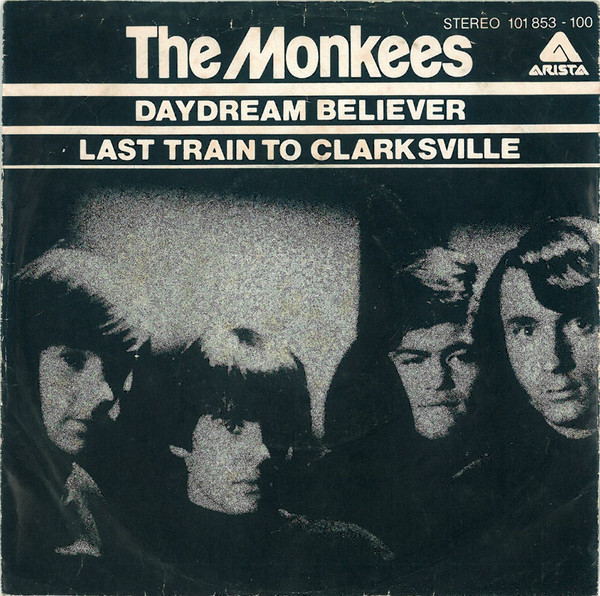
The Monkees black-and-white Arista sleeve, featuring Daydream Believer and Last Train to Clarksville
The sleeve James remembers · artwork supplied via Discogs

’60S POP / DISCOVERED AROUND 1982–83

That black-and-white sleeve.

James supplied this cover to identify the Monkees record he remembers from his early collection. Daydream Believer and Last Train to Clarksville sit beside Northern Soul, Motown and mod records in the soundtrack to his Spectrum years.

The original sleeve carries the Arista logo and catalogue number 101 853-100. Around 1982–83 is James’s recollection of discovering the record; it is not presented as a verified release date for this pressing. He remembers it as an EP.

Original sleeve artwork, preserved locally from James’s supplied image. Credit remains with the original artwork owners; image source: Discogs · release 3880382 ↗.

1979 / MOD RECORDS IN THE COLLECTION

The revival had its own sound.

James also names Mods Mayday among the albums that mattered. It belongs alongside the older ’60s records and Motown albums in his account of discovering music.

Mods Mayday ’79 documents the mod revival: a concert recorded at the Bridge House, Canning Town, on 7 May 1979. Squire’s own retrospective recalls the event and the album’s place in that scene.

Squire / Hilo Records · remembering Mods Mayday.

1970S / DISCO & THE ART OF THE MIX

Make the moment last.

Tom Moulton is one of the influential people James names in this musical journey. His extended mixes and continuous sequences helped change how dance records were heard.

In his own account, tape editing, longer arrangements and experiments with mastering led to innovations associated with the disco mix and the 12-inch single. His work with Gloria Gaynor and MFSB is a place to explore that connection between soul, tape and the dance floor.

Tom Moulton · 2013 lecture and transcript.

LATE ’70S–’90S / HOUSE

A different kind of home.

Frankie Knuckles is another of James’s named influences. Soul and disco run through the house story: records selected, mixed and reshaped for a room full of people.

Knuckles began at Chicago’s Warehouse in 1977 and opened the Power Plant in 1983. His DJing, productions and remixes helped shape house music within the city’s Black and gay club culture. He was part of a wider community of innovators, including Larry Levan and Ron Hardy.

Chicago LGBT Hall of Fame · Frankie Knuckles.

1989 INTO THE ’90S

Another side. Another discovery.

The Deep Heat compilations mark the next part of James’s musical account: house and dance music moving into the ’90s, with a compilation opening the door to more artists and mixes.

Telstar’s series was established in 1989 and continued into the ’90s. Contemporary music-press charts and advertisements place it firmly in that transition. James’s recollection is of the series; a particular volume or pressing is not assumed here.

Music Week · December 1989 compilation chart · March 1990 · Deep Heat 6 advertisement.

LATE ’90S / THE STREAMING YEARS

The collection finds a connection.

The Chemical Brothers, Mansun and the ’90s dance collection connect this story to James’s streaming years as jimthedj65. The technology changes from records and tapes to files and internet radio; the music remains a reason to build.

The listening room brings the supplied recordings into a local Winamp player, with an equaliser, playlist and music-reactive visualisations.

PLAY THE LOCAL COLLECTION ↗

The Chemical Brothers · a change in direction → · From the originals to the house mix →

Personal account and supplied audio files. Read the Shoutcast and hi-fi story →

2001 TO THE PRESENT

The next record is still out there.

James’s influences continue through dance music to Armin van Buuren’s A State of Trance. This is an ongoing listening story, with the early soul and mod records still part of it.

Armin’s official biography dates the first ASOT episode to June 2001. The official programme and its current archive provide the onward connection for episodes, mixes and new discoveries.

EXPLORE A STATE OF TRANCE ↗

Armin van Buuren · official biography. External listening opens on the original service.